


Amid reports of growing famine in Gaza, Israel’s supporters worldwide wonder not why Israel is doing this to the Palestinians, but why Israel is doing this to itself. The Israeli media is filled with reports of soldiers committing suicide, soldiers are killed every few days, compulsory military service is extended, and the issue of the hostages is almost pushed off the agenda. What is the dynamic that allows this state of affairs to continue?
In our monthly newsletter, we explain this dynamic by focusing on the various forces aiding and abetting the genocide in Gaza: the Israeli far right, the Jewish-Israeli mainstream, the international community, and Arab regimes, and finally Hamas.
The Israeli Far Right
The most important factor currently preventing a ceasefire, let alone an end to the war, is the Israeli extreme right. Represented in government by Bezalel Smotrich (leader of the Religious Zionism party) and Itamar Ben Gvir (Jewish Power), the Israeli far right oscillates between religious and populist factions.
Ben Gvir, for example, is far more popular than Smotrich, who represents a relatively narrow religious faction based in the settlements. Such differences aside, their political identity has crystallized around two ideas: expelling Palestinians and settling in their place.
For this group, a comprehensive deal would mean acknowledging that Hamas is still standing. Regardless of the price paid by Palestinians or by Israel, the mere survival of Hamas as a political actor is seen by the far right as a defeat, dashing their hopes for a wholesale ethnic cleansing and resettlement of Gaza.
International sanctions only boost their leaders’ credibility among their base. As long as they are in government, it is hard to expect any halt to Israel’s actions in Gaza
No matter how war-weary Israeli society may be or how important the hostage issue is to many, the Israeli far right is likely the most ideologically motivated, determined and cohesive group among both local and international actors. They cannot let the opportunity before them slip away. No price seems high enough to stop them. Members of this group staff combat units, and likeminded hostage families oppose any prisoner exchange deal.
International sanctions only boost their leaders’ credibility among their base. As long as they are in government, it is hard to expect any halt to Israel’s actions in Gaza. And even if they leave the coalition, they will remain well positioned to undermine stability by intensifying their terror campaigns against Palestinians in the West Bank.
The Israeli Mainstream
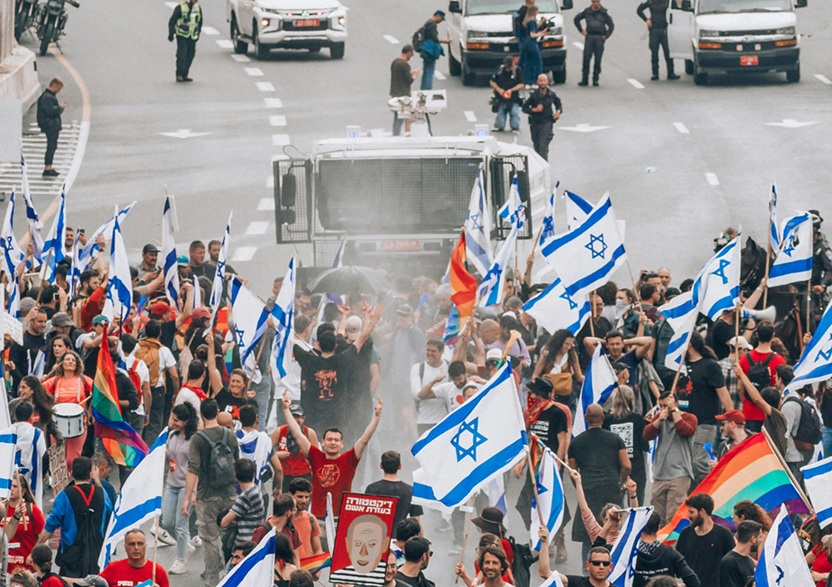
The far right differs from the Israeli political center on two key points: while the former views Palestinians as objects to be displaced and replaced, the mainstream is indifferent to their fate. And whereas the far right is indifferent or hostile to ties with liberal democracies, the mainstream still considers itself part of the West and wants to maintain those ties.
This explains why most Jewish Israelis now want a long-term ceasefire that includes a prisoner exchange. The rationale is that Hamas has been sufficiently weakened. What prevents the Israeli center from strongly opposing the war, whether through protests or refusal to serve, is its enduring commitment to the military ethos.
Military service is a central value for this group, and since October 7, that ethos has only strengthened. From an international perspective, this is the only political camp worth pressuring and holding accountable for ending the war. Paradoxically, however, Israel’s allies are pressuring the far right. Why?
The International Community
The main reason why Western powers do not impose more significant sanctions on Israel is the deep identification that still exists between them. As our colleague, military sociologist Yagil Levy, has recently explained in Haaretz,
“Israel is still seen as part of the West, part of the “iron wall” against the Islamic world, and as a nation deserving compassion due to the trauma of October 7, which evokes memories of the Holocaust. Western nations will keep watching the famine, destruction, killing, displacement, and babies being buried in Gaza—burying with them whatever remains of Israel’s moral identity.”
Precisely because of this deep identification, the willingness of Jewish-Israeli individuals and organizations to label the actions of their country as genocide becomes so important. Two Israeli human rights organizations—B’Tselem and Physicians for Human Rights—have recently done just that.
Our colleague Shmuel Lederman, an expert on genocide studies, has led the drafting of the former report and is also vocal in his stance on this issue in Israeli professional and public discourse. The importance of this statement, which has attracted considerable international media attention, is that it stretches the limits of legitimate criticism.
This critique asserts that what is happening in Gaza and the West Bank can no longer be seen as “war”, but rather as a genocidal assault aimed at erasing Palestinian existence. This means that the Western powers, at least, must hold Israel accountable, and pressure it to cease and desist, and comply with international law.
The gulf countries offer investments in Gaza; Egypt offers to oversee a postwar arrangement. All pressure Hamas to show flexibility
Arab States
Faced with the genocide in Gaza, the main interest of the pro-Western Arab regimes in Egypt, Saudi Arabia, Jordan, the UAE, and Qatar is maintaining their own stability.
Egypt and Jordan in particular are torn between their societies’ deep solidarity with the Palestinian cause and their desire to remain aligned with the Western hegemony that supports Israel. In the background of most of the discourse on Israel/Palestine lurks the potential for regime collapse. This could happen due to mass protests against Israel’s actions in Gaza.
Israeli pressure on residents of Gaza and the West Bank to take refuge in Egypt and Jordan could also undermine these regimes.
For these reasons, the “moderate” Arab states currently serve as dedicated mediators between Israel, the Palestinians, and the West. The gulf countries offer investments in Gaza; Egypt offers to oversee a postwar arrangement. All pressure Hamas to show flexibility. The claim sometimes made in Israel as though these regimes are unreliable or manipulative intermediaries ignores their own urgent need for stability, as well as their Arab identity.
As long as the genocide continues, their popularity declines. A ceasefire could restore some of the stability they need.
Hamas
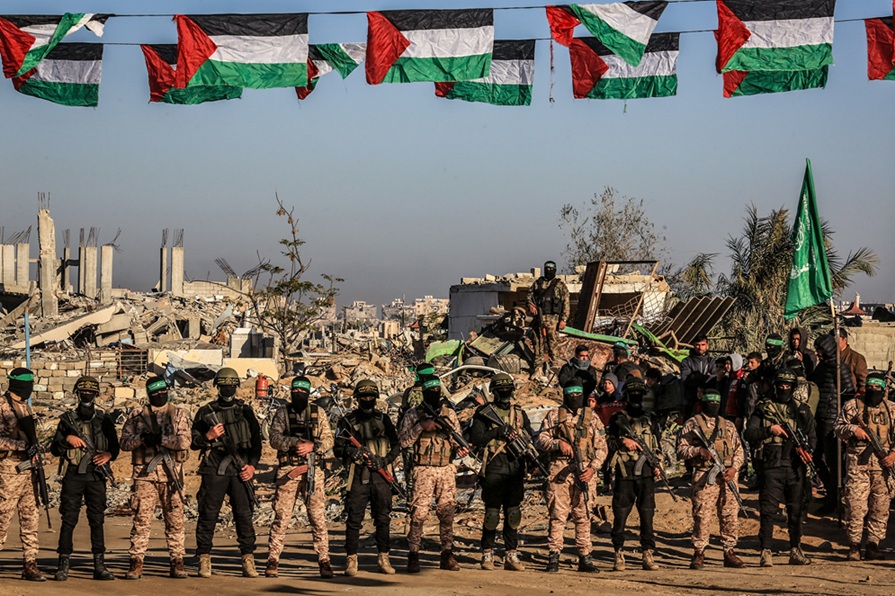
Hamas’s demands have not remained unchanged throughout the war, as often argued in Israel. Several key shifts can be identified. The original goal of capturing Israeli soldiers and civilians on October 7 was to secure a prisoner exchange. When it appeared that Israel would permanently reoccupy Gaza, the demand shifted to an Israeli withdrawal, with the hostages serving as guarantees.
For several months now, Hamas has been signaling—especially via mediators like Qatar and Egypt—that it has no desire to govern Gaza. However, it will not lay down its arms, especially not small arms, and will portray an Israeli withdrawal and the end of hostilities as proof that it remains standing.
In any case, it remains unclear what it even means to “control” a territory where nearly all infrastructure has been destroyed. Notably, many in Gaza, including prominent figures, call on Hamas to end the war immediately by way of total surrender that might spare Palestinian lives. Hamas is aware of these pressures, but is not willing to cave in.
Hamas’s reluctance to accept a partial deal—even if such a step cannot be ruled out—brings us back to the beginning of this text. A partial deal could open the door to renewed Israeli assault. Hamas has very little incentive to agree to such a deal, as its likely aftermath is total war.
The idea of a prisoner exchange within the framework of a partial deal also ignores the ongoing ethnic cleansing of Palestinians in the West Bank, where the last remnants of legal protection for Palestinians are being crushed, as recently noted by attorney Michael Sfard.
Many in Gaza call on Hamas to end the war immediately by way of total surrender that might spare Palestinian lives. Hamas is aware of these pressures
*
This overview of the various parties to, or culprits in the genocide of Gaza demonstrates once again that the only real path forward lies in pressuring Israel and standing up for Palestinian lives and rights. Alternative paths may offer temporary stopgaps, nothing more.


